Traqula: Providing a foundation for the evolving SPARQL Ecosystem through modular Parsing, Transformation and Generation


Jitse De Smet

Ruben Taelman

ESWC 2026 Resource Track supporting slides for Traqula Resource, 11 May 2026

Traqula: Providing a foundation for the evolving SPARQL Ecosystem through modular Parsing, Transformation and Generation

Ghent University – imec – IDLab, Belgium

Research Foundation - Flanders

Paper at:
traqula-resource.
jitsedesmet.be
Available on npm, TypeScript and JavaScript, ESM and CJS
Managed by the Comunica Association, already used within Comunica

Overview

One Query — Many Languages

SELECT ?person ?gmt ?certain
WHERE {
  ?r rdf:reifies <<( ?person ex:birthDate ?dateTime )>> ;
     ex:certain ?certain .
  BIND(ADJUST(?dateTime, "-PT0H"^^xsd:dayTimeDuration) as ?gmt))
  FILTER (?certain > 0.5 && MONTH(?gmt) = 1 ) .
}
A SPARQL 1.2 federated query targeting four endpoints with different SPARQL versions and extensions

Bridging is essential

Three key challenges

Query Evaluation

A SPARQL 1.2 query may fail on one endpoint and work on another

SPARQL 1.2 query
→ sent to SPARQL 1.0 endpoint
Error

Tooling

Linters, editors, and formatters assume a single SPARQL version

IDE, linter, language server
→ built for SPARQL 1.1
breaks on SPARQL 1.2 syntax

Maintainability

Multi-version support
→ messy, hard-to-maintain code

if SPARQL_1_1 ...
else if SPARQL 1.2

→ duplicate code
Fragile codebase

Overview

Demystifying parsers

Demystifying parsers

Demystifying parsers

Demystifying parsers

Demystifying parsers

Demystifying parsers

Transform across query string, AST, and algebra

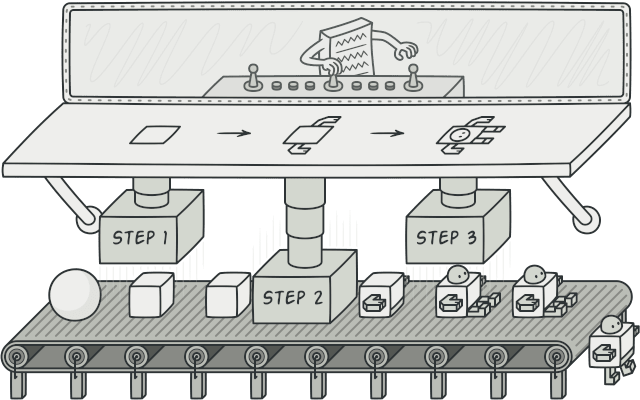
Flexibility through rule composition

© refactoring.guru

Overview

~10x faster than JavaScript/ TS tools

Language and parse targets affect speed

Already in production

Conclusion

Problem

SPARQL language heterogeneity is a growing challenge for query evaluation, tooling, and maintainability

Solution

Traqula: flexible · round-trippable · web-native · language-agnostic

Impact

Foundation for a unifying framework across languages and dialects. Ready for linters, formatters, LSPs, and future query languages

Also check out our demo
compose-parser-engine.demo.jitsedesmet.be

© 2026 Jitse De Smet Creative Commons Attribution 4.0, unless otherwise indicated.

Source